A CMA data format in Excel for bank loans
A workbook for Indian startups and SMEs preparing a bank or NBFC proposal. It sets out Forms I–VI, maximum permissible bank finance, the turnover method, DSCR and the ratios lenders usually look at. The sample company is hypothetical.
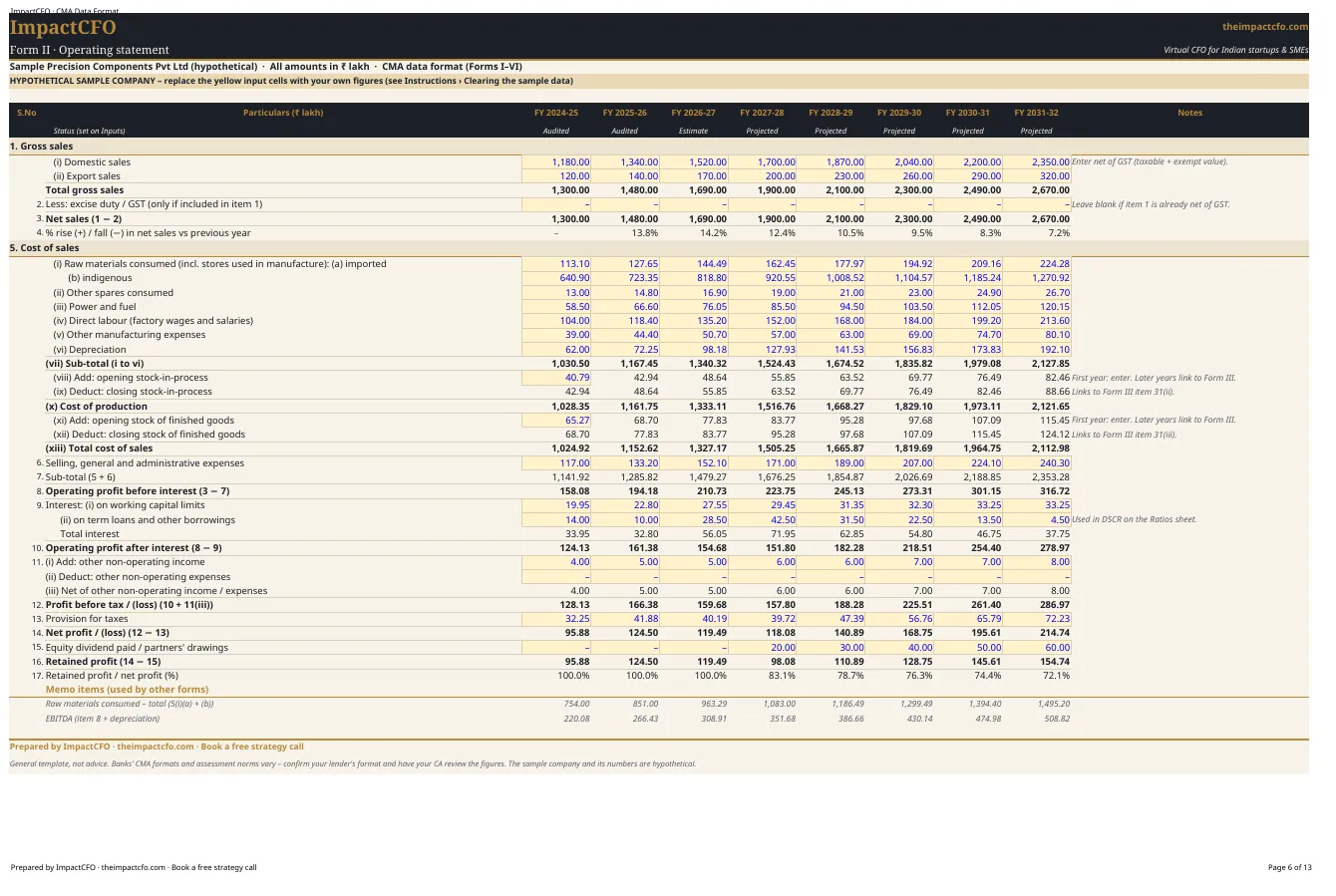
- Ten sheets: Instructions, Inputs, Form I Limits, Form II Operating Statement, Form III Balance Sheet analysis, Form IV Current Assets and Current Liabilities, Form V MPBF, Form VI Funds Flow, Ratios, and Cross-checks.
- A hypothetical sample, Sample Precision Components Pvt Ltd: two audited years, one estimate year and five projected years. Amounts are in ₹ lakh. Replace the yellow input cells before you send the file.
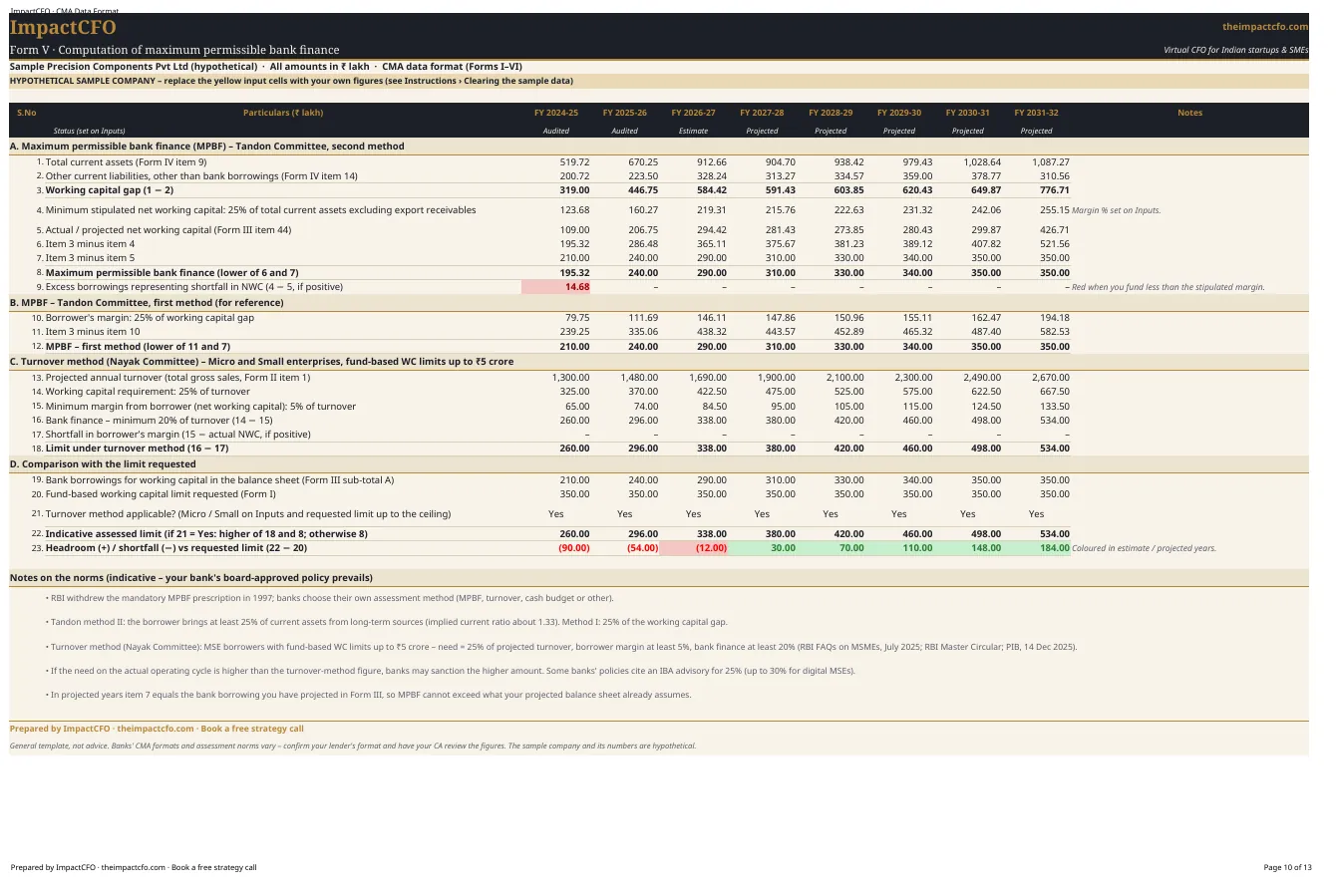
- MPBF on Tandon method II, with method I shown for reference.
- The Nayak Committee turnover method: 25% of projected turnover and a 5% margin, for MSE working-capital limits up to ₹5 crore. Labelled indicative, because banks use their own assessment methods since RBI withdrew mandatory MPBF in 1997.
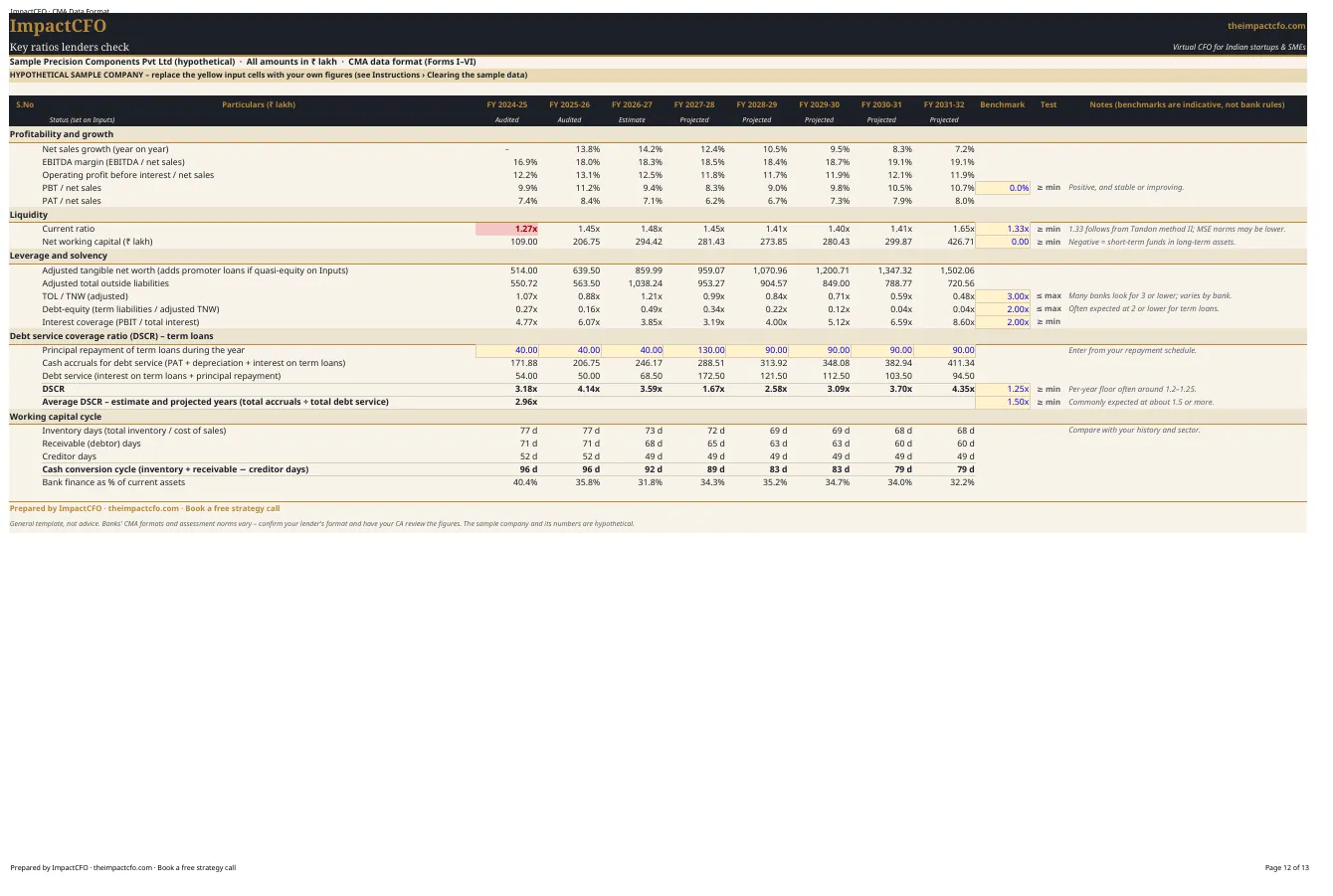
- A ratios sheet with typical lender expectations, not published rules: total outside liabilities to tangible net worth of 3 or below, debt-equity of 2 or below, interest cover of 2 or above, and DSCR of 1.25 a year and about 1.5 on average.
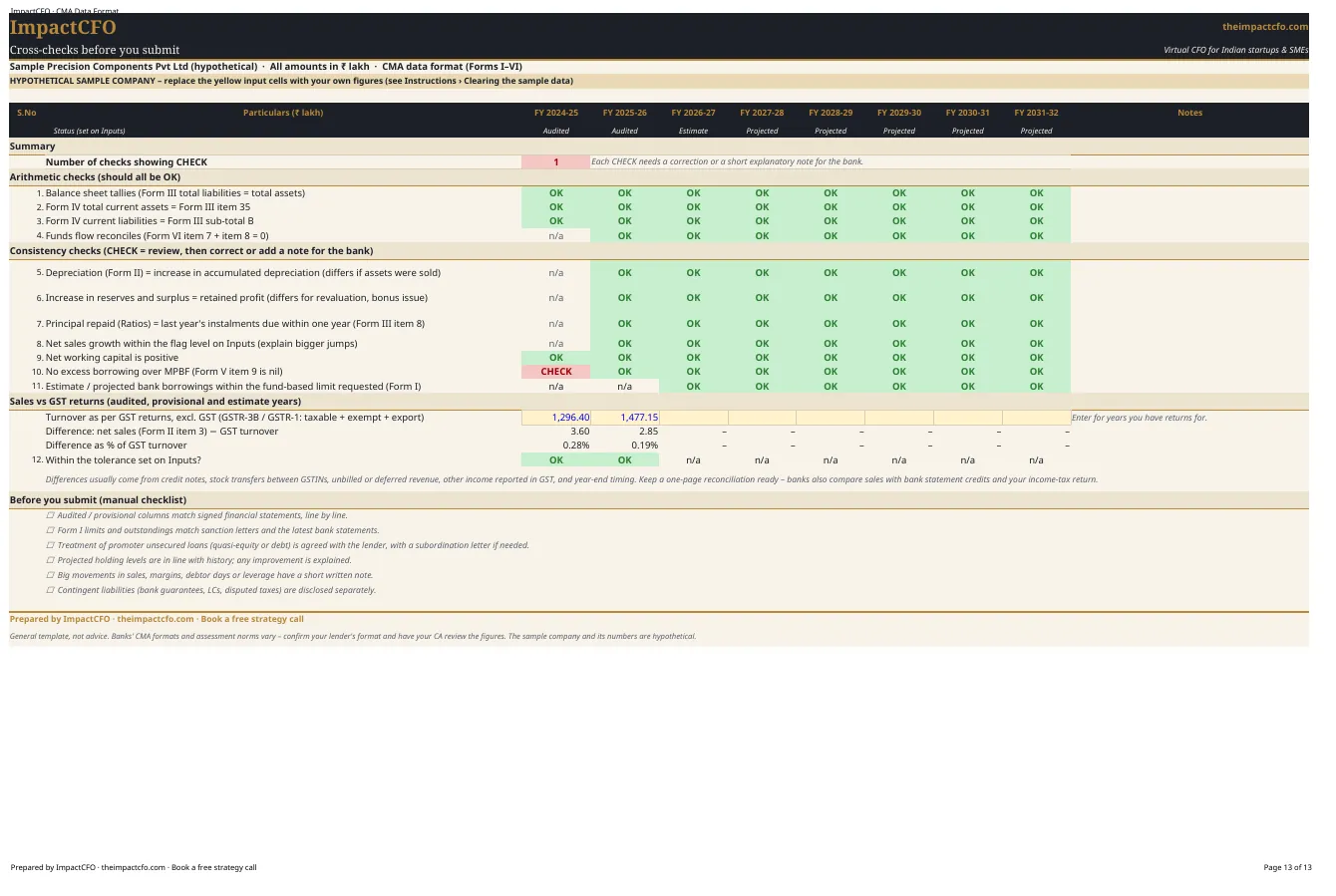
- Twelve automatic cross-checks, plus a short checklist to complete before you submit.
Get the workbook
Tell us where to send it. The download starts as soon as the form is sent.
Read the CMA data report guideDSCR and working capital calculator
FAQs
What is in this CMA data format?
Instructions, an inputs sheet, Forms I to VI (limits, operating statement, balance sheet analysis, current assets and current liabilities, MPBF, and funds flow), a ratios sheet, and a cross-check sheet with 12 automatic checks.
Which MPBF method does the workbook use?
Tandon method II is the working method. Method I is shown for reference. The Nayak turnover method is also calculated for micro and small enterprises with fund-based working-capital limits up to ₹5 crore: 25% of projected turnover and a 5% margin. These figures are indicative. Banks have chosen their own assessment method since RBI withdrew the mandatory MPBF prescription in 1997.
Are the ratio benchmarks official bank rules?
No. Total outside liabilities to tangible net worth of 3 or below, debt-equity of 2 or below, interest cover of 2 or above, DSCR of 1.25 for a year and about 1.5 on average are typical lender expectations, not published rules. Your bank's credit policy applies.
Is Sample Precision Components Pvt Ltd a real company?
No. It is a hypothetical sample with two audited years, one estimate year and five projected years. Replace the yellow input cells with your own figures, and have your chartered accountant review them, before the file goes to a lender.
Does this replace my bank's own CMA format?
No. It follows the usual Forms I–VI layout so you can prepare the numbers. Confirm the format, ratios and assessment method your lender wants. A Virtual CFO can build the projections from your books and keep the schedules consistent.